

Buying a car is usually the most expensive purchase that someone makes after their home, so it’s no surprise that it’s demanding both emotionally and financially.
So does buying an EV make that experience worse or easier? I’ve written about buying an EV before here, but I was about to find out first hand. It had been quite a few years since I’d bought and owned a car for my own personal regular use, but the time had come to get a set of wheels.
Eventually I settled on a Kia E-Niro. It had been admittedly many years since I’d driven one, but I could remember being impressed, I liked the design and it wouldn’t break the bank. It may not have been the most exciting car to drive, but I had future plans for a second weekend car, so this would be for everyday use.
There were plenty of examples around, but they had either done high mileage or were at car supermarkets. Nothing wrong with car supermarkets of course, but they have central phone systems, so it’s hard to talk someone with hard knowledge of the car that’s in front of them. They also often buy the cars at auction, so few have any kind of history included, which can be frustrating.
The good news with EVs of course, is that there’s less to check or go wrong, but I still wanted the regular servicing to have been kept up to retain Kia’s seven year warranty. It had been a while since I’d bought a car and I was also surprised by just how many written-off cars (Cat S or Cat N) there were on offer as well.
Having narrowly missed out on a car that I thought was a great opportunity, I managed to find another on sale at a (non Kia) franchised dealer that had been taken in part exchange. It was slightly more expensive, but had done a lot less miles (17,000mls in three years) and was one owner with a full service history. The dealer told me it was in great condition.
I jumped in the car and fought through dreadful London traffic to get there. The car may have been more money, but buying from a dealer gave me more peace of mind, which helped. The salesman was looking after another customer when I arrived, so I could check the car over before he was free. The front wing was the first thing I noticed. A huge ten inch long scratch, down to the primer across the front of the wing, with lesser surface scratches along the side of the car. Those could be polished out, the wing couldn’t.
There were more grazes too on the other wing and around some of the rest of the car. I wasn’t expecting a concours car, but the three years living in London had clearly taken their toll. The same went for inside. The seat felt like an old squashy armchair that belied the 17,000 miles and when I dug out the service book, there were no stamps inside, not even for the first service after two years. So much for that full history and great condition.
Undeterred, I ventured out on a test drive. Having test driven cars for more than 30 years, you develop a sixth sense about cars and something wasn’t adding up. The steering was woolly, the suspension felt soft and, along with that driver’s seat, it felt like I was driving a giant duvet. Very comfy, but without the odometer (which I’d had verified I might add), I’d have guessed this car had driven 60,000 miles not less than a third of that.
Perhaps I had misremembered how the Niro had driven before, but as I was up against it to get a car and after they’d promised to rectify those scratches, I made the dealer an offer.
It didn’t help my cause that I didn’t want to buy it on finance and also that I couldn’t take delivery until beyond the end of the month. In retrospect, all the warning signs were there. I wasn’t convinced about the car anyway and was under pressure to seal the deal before I went away on holiday.
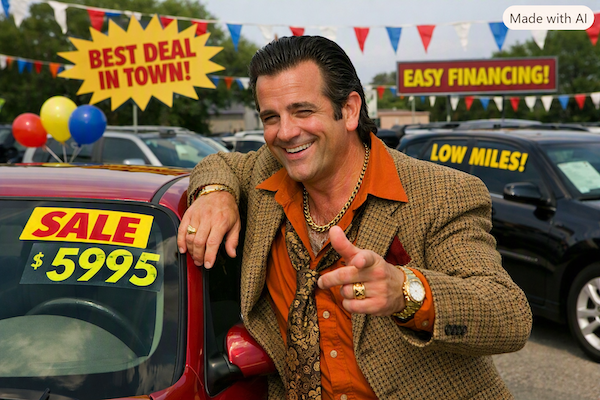
When I asked to negotiate on the price, the salesman did the classic “I’ll go and talk to my manager” and left me alone, which only made my already frustrated mood worse. He came back with a figure that was marginally above what I wanted to pay and wouldn’t budge any further. The 2.5% discount I was after I felt was fair, especially as I’d done my homework and given the car’s condition and that lack of service history.
When he returned again, this time with his slightly smarmy manager, they still wouldn’t budge despite us being £200 apart. However, I had a figure in mind that I didn’t want to go abov and the look on the manager’s face told me that he fully expected me to give way. But I was in a particularly stubborn mood and so I walked away, annoyed that I’d wasted a whole day.
In hindsight though, they actually did my a favour. On my return home, I had a rethink and decided to spend a little more and upgrade to a Kia EV6 instead. I’d always liked them since the original press launch in 2021 in Spain.
Consulting with motoring journalist friends, they were in agreement. The Niro was a good car, but they reckoned I’d be bored within six months. The EV6 was a far better drive they said, which I’d be far happier with.
And so the search began again, with some surprising results. EV6s were almost the same price as E-Niros, albeit with more mileage, but I knew I would be getting more for my money. As if the stars were aligned, I found one close by, in the colour and trim I wanted and at a good price, close to where I was holidaying that week too at an EV specialist.
A diversion on our way home, a quick test drive and the car was clean. The car was already keenly priced, but the dealer had a no-haggle policy and, in such a good condition, I was happy to shake on the deal and take the car. The difference between the two experiences could not have been more different.
So what had I learned? While some of the old advice about buying a used car clearly still remains, especially around condition and trusting your gut feel, there’s no question that buying an EV is made a lot easier. Mileage is less of an issue for starters especially with batteries having warranties still in place for two or three year old cars.
The same goes for their service history. Some EVs, like the EV6, only require servicing every two years, so you need to ensure you’ve timed it right. After three years, any car needs an MOT of course, but that’s only a certificate of roadworthiness, it doesn’t tell you if the car has been looked after.
That’s the only other factor with those car supermarkets mentioned earlier, some are less likely to hang on to any service history or bills that have come with the car, particularly if they’ve been bought at auction. And if those are missing, it’s harder to make a judgment call on whether a car has been looked after or not – bar you going over the car with a fine toothcomb. You should also make sure it has the charging leads present – all too often they’ve been sold on eBay separately.
The upside of course, is that there are far less mechanicals to take care of and check compared to an ICE vehicle, and in turn, that means less to go wrong as well.
And the ironic kicker to the story? That original dealer contacted me on the Monday morning after my visit to reduce the difference to £95, not £200, but I had missed it due to being away. Two weeks on, they contact me again, to find out if I was still interested. So for £200 they had missed out on a nailed-down cash buyer ready to buy the car there and then. And instead, the car had sat on their forecourt, unsold, for three weeks – a cost to the company easily in excess of that original £200.
Now I may be out of practice at buying cars compared to that far more experienced sales manager that I experienced, but even I know that that’s not good business. And that is why, despite it being a stressful experience and despite an EV removing some of that difficulty, going with your gut-feel and your sixth sense about whether a deal feels right or wrong will always be the best advice.